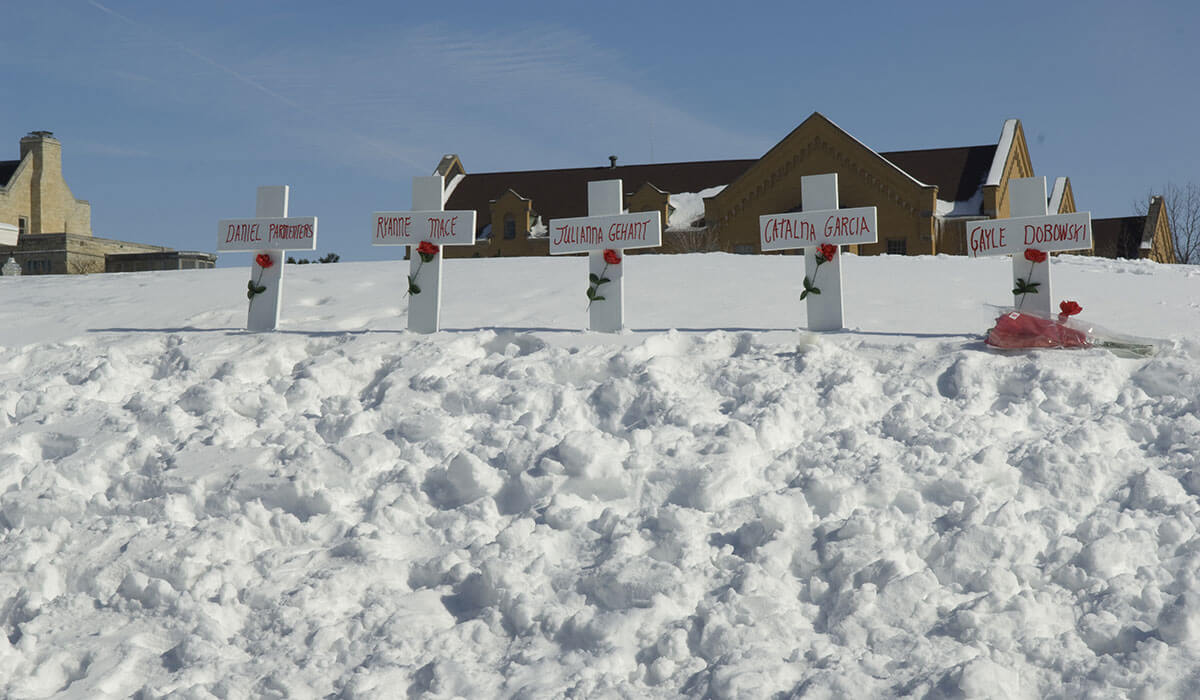
Other than being Valentine’s Day, there was nothing remarkable about Thursday, February 14, 2008. It was cold, there was snow on the ground, and students in Ocean Science 104 were listening to a lecture in one of Cole Hall’s two auditoriums.
Suddenly a man burst through a back door and onto the stage, firing a shotgun first at the lecturer and then into the audience. Some students ran; others crawled under the seats to a back door; still others sat frozen, unable to comprehend what was happening. The shooter walked up and down the aisles, firing two pistols.
Less than five minutes after he began the attack, the gunman took his own life on the stage. He had fired 50 rounds, killing five students and injuring 18 more. Eight of the injured were in critical condition.
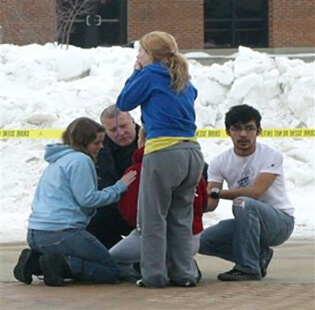
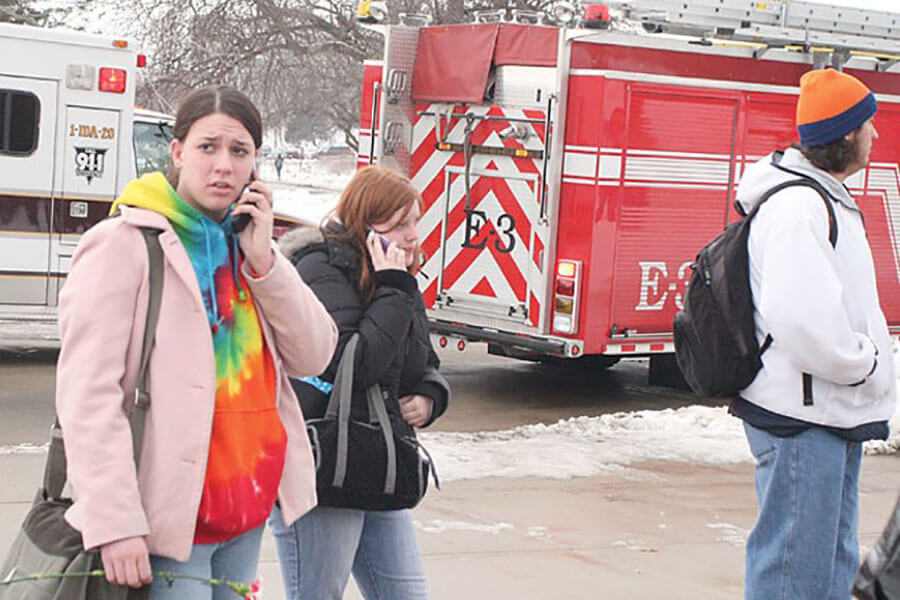
Outside students stumbled, some shoeless and most without coats, into the bright light of a snow-covered campus. Emergency responders were on the scene within minutes, as units from throughout the region poured onto campus. The speed with which injured students received care and were transported to hospital was later acknowledged as having saved many lives.
Other stories of heroism later emerged, including that of Huskie offensive lineman Tim Mayerbock, who carried an injured student out of harms way. Although they had never met before, Mayerbock stayed with the victim, through an ambulance ride and at the hospital until family arrived.
Also within minutes came a sound that many learned to hate – that of news helicopters hovering overhead. The onslaught of media attention added heavily to the burden of an already overwhelmed campus leadership.
Within 15 minutes of the first call to 911, the Office of Public Affairs had posted alerts on the NIU website and sent broadcast emails and voicemails to the campus. Ninety minutes after the first shot was fired, NIU officials held the first of several news conferences. Media packed the Altgeld Auditorium as a shaken President Peters delivered the news that a mass shooting had taken place, and that there were fatalities.
Massive cell phone use in the minutes following the shooting overwhelmed cell towers and shut down service till later that evening. At Kishwaukee Hospital in DeKalb, emergency crews were tending to an unprecedented number of gunshot victims while managing dozens upon dozens of family members who rushed there with little to no information about their students.
The chaos that reigned on February 14 soon gave way to many days, weeks and months of recovery.
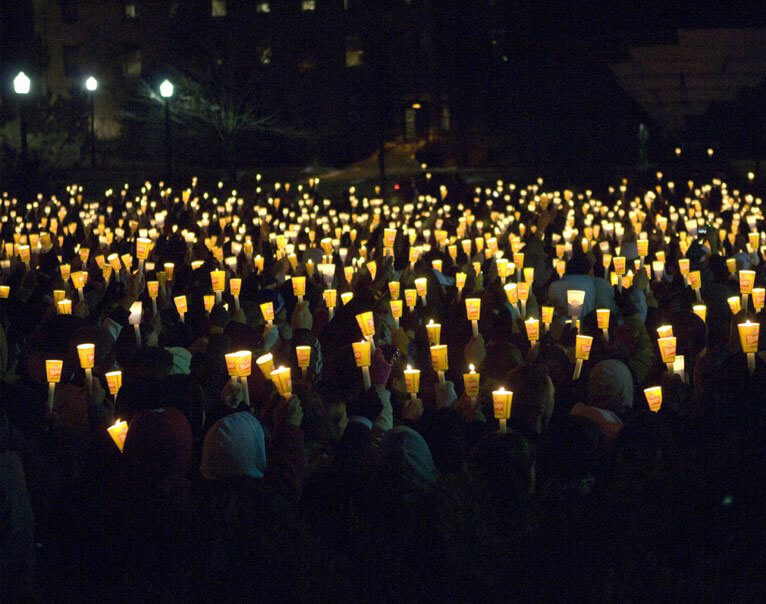
Classes were cancelled for the remainder of that week and for all of the following week. A memorial service was held at the Convocation Center on the Sunday before classes were to resume. More than 10,000 people attended in person, with thousands more watching remote broadcasts. Illinois’ governor and its entire congressional delegation attended, including a junior senator named Barack Obama.
When classes resumed the following day, a call for 50 volunteer counselors to work with anguished students was answered by more than 300 mental health professionals from across the country.
Colleagues from Virginia Tech, who flew out to offer help in the early days of the crisis, remained in touch throughout the weeks and months ahead. From their experience and advice came creation of the Office of Support and Advocacy to work with victims and families. The office, which offered support, practical assistance and comfort, was in operation for five years.
Decisions had to be made on a nearly hourly basis, for it is no small matter to shut down and then re-open a university full of shell-shocked, grieving students, faculty and staff. In all things, President Peters urged, let us err on the side of kindness and compassion. And we did.
And then there was the matter of Cole Hall.
In the early days of grief and anger, Peters vowed to tear it down. No student should have to go in there again, he reasoned, and it would be a dark reminder of NIU’s worst hour. Yet Peters listened when a campus survey reported a different view: that destruction of Cole Hall would mean that the shooter had won. Instead, the scene of the tragedy remained closed for several years, finally remodeled with money from the state and reopened in a new incarnation in 2012.
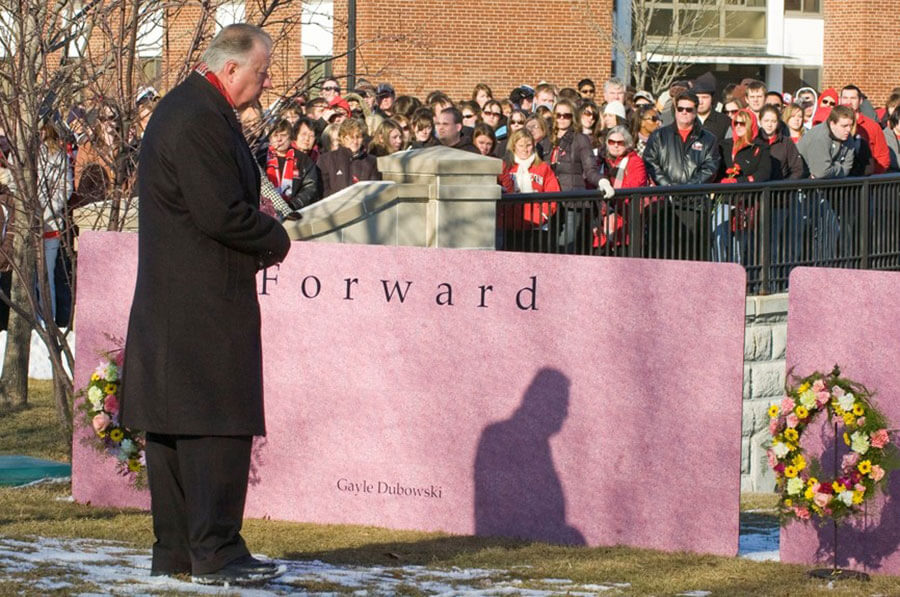
More than a million dollars in unsolicited donations poured into the NIU Foundation, some of which were used to create a Memorial Garden outside of Cole Hall, with granite markers, beautiful landscaping and an uplifting piece of sculpture. The donations also helped create a scholarship program that each year honors five students of strong character who reflect the values of those lost on 2/14:
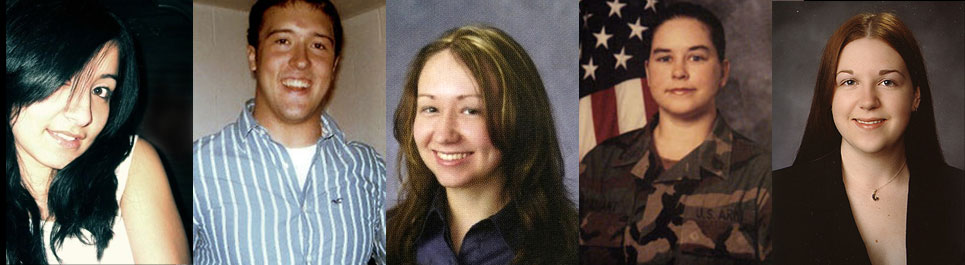
From left to right:
Catalina Garcia, 20, sophomore Elementary Education major
Daniel Parmenter, 20, sophomore Finance major
Gayle Dubowski, 20, sophomore Anthropology major
Julianna Gehant, 32, junior Elementary Education major
Ryanne Mace, 19, sophomore Psychology major
Around town, businesses and individuals purchased, decorated and displayed life-size Huskie statues – many of which remain to this day. Lighted marquees throughout the community bore messages of hope and support. And it was from those expressions of support that one phrase became a symbol of strength in unity: Forward, Together Forward.
Click on photos to enlarge