During its first fifteen years, NISNS had no dormitories.  Students boarded with local families or lived in boarding houses in what is now known as the Ellwood Historic Neighborhood just to the east of campus.

President John Williston Cook believed that the very future of the school depended on being able to provide housing for a growing number of students.  In 1913, the state legislature finally appropriated $125,000 for construction of what Cook called “the house for women.”

The new building was four floors tall, with 40 double and 47 single rooms, and it quickly filled with female students.  It featured a large living room with a grand piano and adjoining dining room, providing at last a place for parties, dinners and dances.  The “house for women” soon became the center of campus social life.  And keeping with the school’s reputation for affordability, room and board was $6.50 per week.

The NISNS Board of Trustees sought to honor President Cook by naming the building after him, but since there was already a “Cook Hall” at ISU in Bloomington, they chose instead to use the revered president’s middle name, and the school’s first dormitory became Williston Hall.

The formal dining room provided a place for meals and social events
Williston Hall attic
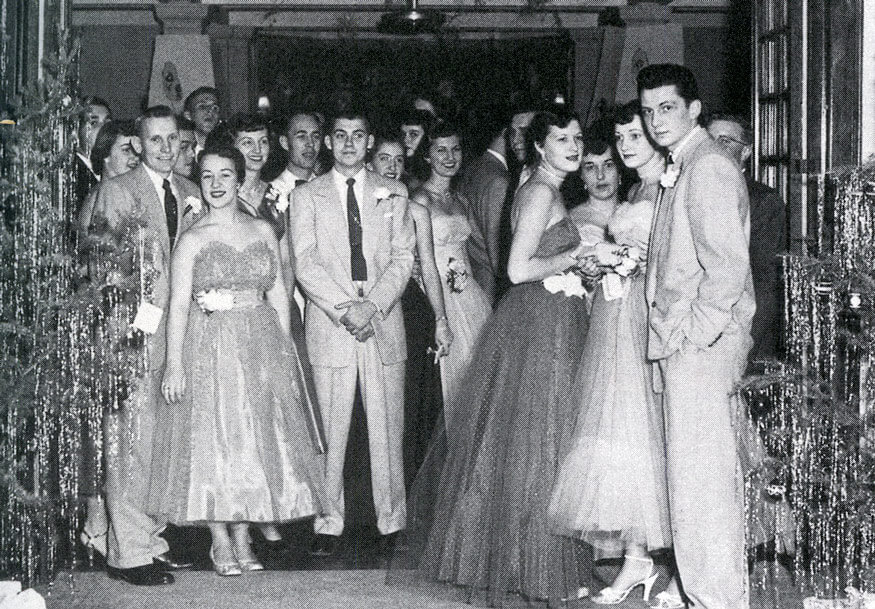
The third major dance of the fall term in the 1950s was the Christmas Formal, held at Williston Hall
Williston Hall played host to many visiting dignitaries over the years. Here President Leslie Holmes talks with Former First Lady Eleanor Roosevelt at a 1950s reception in Williston.
Date posted: February 17, 2020 | Author: | Comments Off on Williston Hall opens as first residence hall for women (1915)

Categories:

By the time the U.S. entered World War I in April of 1917, Northern’s enrollment had reached 424 women and 58 men. By the fall semester of 1918, enrollment had plummeted to 223 women and no men.

Many of the male students had enlisted; some were drafted; and others left to tend family farms and take on other services needed for the war effort. Several male faculty and staff also enlisted.

The effects on the young college and its remaining students were substantial. There were no football teams during 1917, 1918, and 1919 as there were not enough men available to field a team. Nearly the entire baseball team enlisted as a unit in the Hospital Corps of the 129th Infantry. Female faculty and students joined Red Cross efforts, cutting and sewing gauze bandages to be sent to the front. Reports in the student newspaper from that era indicate that co-eds (as female students were called) spent a great deal of time making candy and other gifts to send to their soldiers.

One particular instance of sacrifice appears in many of the historical records of the time: The Senior Class of 1918 voted to forgo a yearbook that year and instead used the $800 they saved to purchase a fully-equipped ambulance that was sent to France where many of their classmates were serving on the front lines.

Each morning students attended General Exercises in Altgeld Auditorium, where a Service Flag with 121 stars (one for each student serving in the war) hung front and center over the stage. The flag eventually had four gold stars sewn onto the back in honor of four students who were killed in action.

Supporting the war effort touched every aspect of life at NISNS. At the supper table, students ate barley bread and cleaned their plates in an effort to follow the guidelines of the U.S. Food Administration’s food conservation program. The effort sought to preserve scarce food resources with voluntary sacrifices such as “wheat-less Wednesdays” and “meat-less Mondays.” 

In addition to the war, the NISNS community was hard hit by the flu epidemic of 1918, causing President Cook to close the school for a period of time in October of that year.

“When we shall begin again is a matter for the future to decide,” Cook wrote. “There is nothing that seems of consequence now but the war and the epidemic.”

Click on photos to enlarge

This service flag bears a star for every Northern student serving in WWI. The four gold stars represent those students killed in the conflict — Howard Byers, Wendell Lindberg, Clinton Glidden and Martin Chase.
The yearbook staff of 1918 voted to forgo a yearbook that year and instead use saved funds to purchase an ambulance for the war effort.
Home on leave, Sgt. DeVilliers waits for a lady friend outside Williston Hall.
Date posted: February 17, 2020 | Author: | Comments Off on World War I puts its stamp on NISNS (1917 – 1918)

Categories:

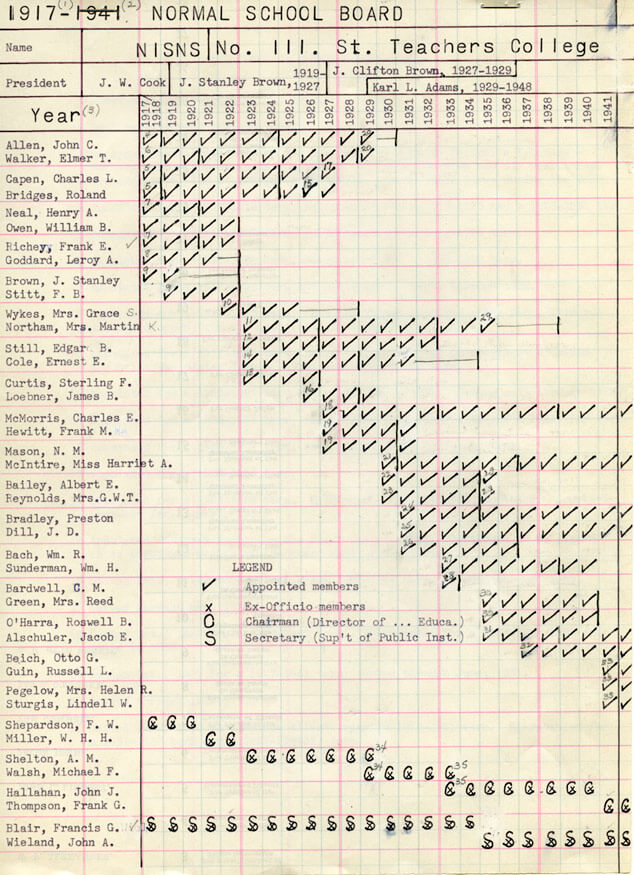
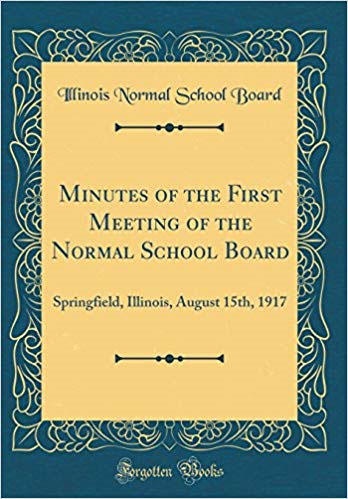
For the first 18 years of its existence, Northern was governed by an independent Board of Trustees. That came to an end in 1917, when the state consolidated the governance of all five normal schools under a single Normal School Board.

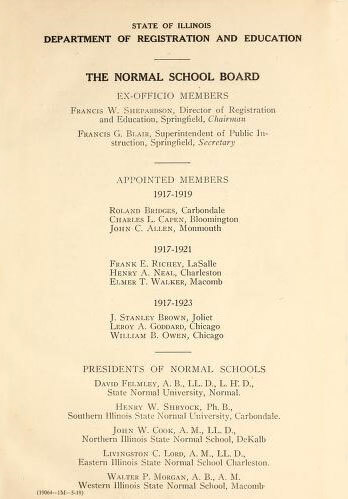
The new board had nine voting members appointed by the governor, along with the state superintendent of public instruction and the director of the Department of Registration and Education as ex-officio members.

While the consolidation did reduce the administrative costs of five separate boards, it was not popular with the normal school presidents. Under the old boards, the presidents were given a large measure of administrative control, including the ability to use various fees to pay bills, meet emergencies, and give raises without having to seek board approval. In general, the presidents argued, the move to a consolidated board slowed progress and increased red tape in the running of their universities. Beyond that, and of particular irritation to President Cook, was the fact that board meetings were now held at different locations across the state. After returning from a long trip to Carbondale for one such meeting, Cook confided to his sister that he was tired of “this running-around business.”

Nonetheless, it would be nearly 80 years before Northern would once again have its own, independent governing board.

Click on photos to enlarge

A hand-made roster of members of the Normal School Board (later renamed State Teachers College Board) that governed Northern and four other colleges from 1917 – 1941
Date posted: February 17, 2020 | Author: | Comments Off on NISNS Board of Trustees replaced by “Normal School Board” (1917)

Categories:

When John Williston Cook’s 20-year presidency came to an end in 1919, the state’s Normal School Board named one of its own members to become the next NISNS chief executive.

J. Stanley Brown had been the principal of Joliet Township High School and was an early follower of William Rainy Harper, the University of Chicago educator credited with development of the junior college. Brown added two years onto his high school’s curriculum to prepare students for admission to prestigious universities; the resulting Joliet Junior College is often recognized as the first of its kind in the nation.

One of President Brown’s principal interests was integrating the school into the life of its host community. He sponsored conferences, concerts and fundraising events to address community problems, and did not hesitate to ask community leaders for help with improvements at NISNS.

Brown is best known for his adept use of public relations, an emerging practice in the early 1900s. He dressed up the annual course catalog, wrote boosterish editorials in the local newspaper, and regularly reminded the citizens of northern Illinois of the great economic impact the school had on the region.

While his predecessor had been reticent to change the normal school mission and its two-year degree program, Brown eagerly embraced the move to make NISNS a four-year school that prepared students to teach at both the elementary and secondary levels. He also worked hard to recruit more male students, primarily through the introduction of industrial education courses and the enlargement of athletic programs.

He was successful in both regards: male enrollment doubled between 1920 and 1926, and the NISNS athletic program consistently fielded winning teams, particularly in football.

Brown served as president from 1919 to 1927. He retired to his home in Joliet, where he periodically worked as an inspector of teachers colleges until his death in 1939.

Click on photos to enlarge

J. Stanley Brown, Northern’s second president
President Brown sought to increase the number of male students with greater emphasis on athletics. Here are members of the 1926 football team.
Date posted: February 17, 2020 | Author: | Comments Off on J. Stanley Brown becomes Northern’s second president (1919)

Categories:

By the time Northern underwent the first of its three name changes, it had technically been able to offer bachelor’s degrees (and thus be a “college” rather than a “school”) for 14 years.

Nonetheless, the move signaled that the effort to convert the two-year normal school into a four-year college had begun in earnest. A number of faculty committees began immediately to develop a four-year degree curriculum, deciding to offer the degrees in music, drawing, domestic science and general curriculum – all intended for those who wanted to teach at the high school level.

The McMurry Practice School on NISTC’s campus had been built for elementary students, so President J. Stanley Brown identified two nearby high schools just outside DeKalb where secondary-school teacher candidates could practice their classroom management skills.

Many new courses had to be added to the curriculum, including logic, surveying, Latin American history, social psychology, calculus, journalism and school administration, to name a few.

Other innovations included incorporating the findings of psychologists who were beginning to influence public education in the areas of guidance counseling and testing of teacher candidates to determine optimal teaching placements.

By the end of the decade, Northern Illinois State Teachers College enrolled more than 750 students, had nearly 70 full-time faculty, and counted among its building inventory five buildings: Altgeld, McMurry, Williston, Still Hall and Still Gym.

Click on photos to enlarge

New seal for a new institutional name
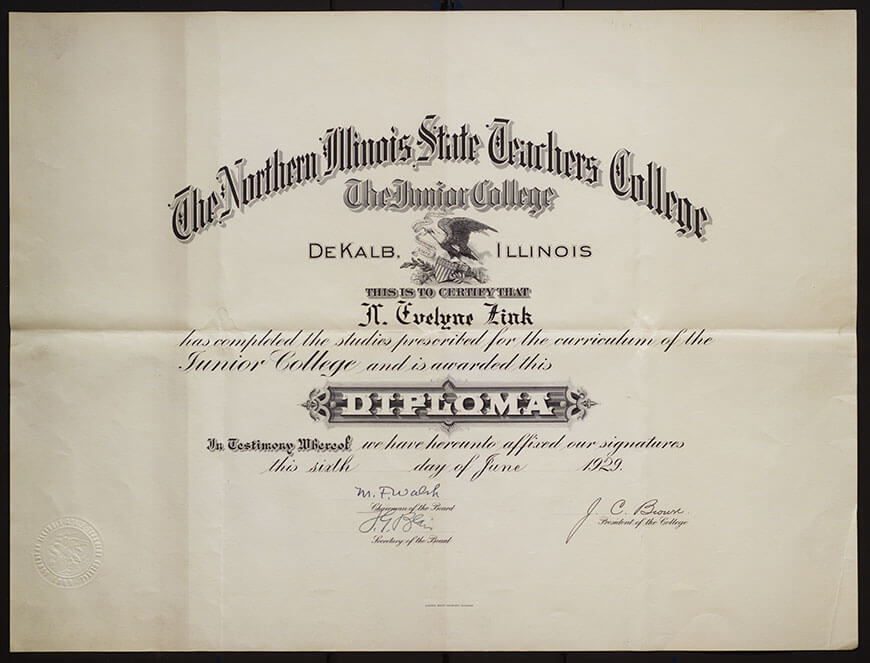
A diploma bears the new name Northern Illinois State Teachers College. This particular graduate had finished their two-year program, which for a time was referred to “junior college,” while a four-year degree was earned in what they called “senior college.”
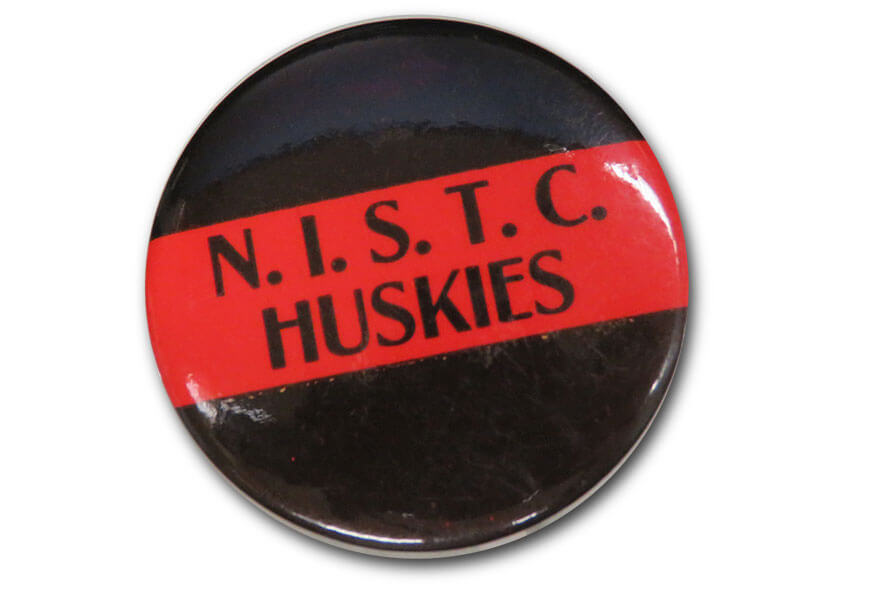
From the Regional History Center archives in Founders Library comes this expression of NISTC pride.
Date posted: February 17, 2020 | Author: | Comments Off on Name changed to Northern Illinois State Teachers College (1921)

Categories:

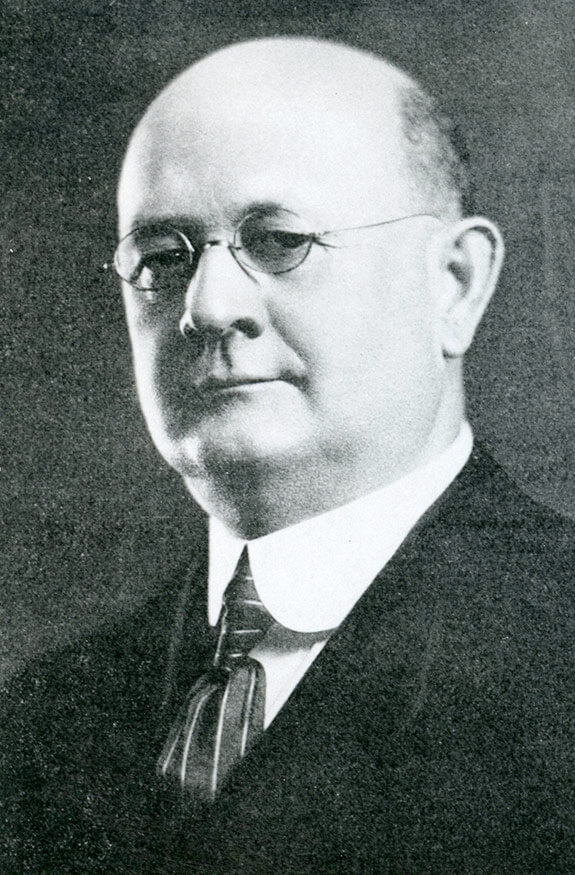
Joseph Clifton Brown, president of State Teachers College at St. Cloud, Minnesota, was the board’s choice to become NISTC’s third president.

Described as an excellent speaker with an unbridled enthusiasm for trying new things, Brown was immediately popular with students, faculty and townspeople. He started biweekly faculty meetings that sound somewhat like a modern book club: members were assigned books and essays to read, while each had to take a turn at leading the discussion on same. Sometimes those conversations centered on new approaches to teaching; other times Brown would ask the faculty to take up broader topics, such as ‘What are the other teachers colleges doing that DeKalb ought to do?’

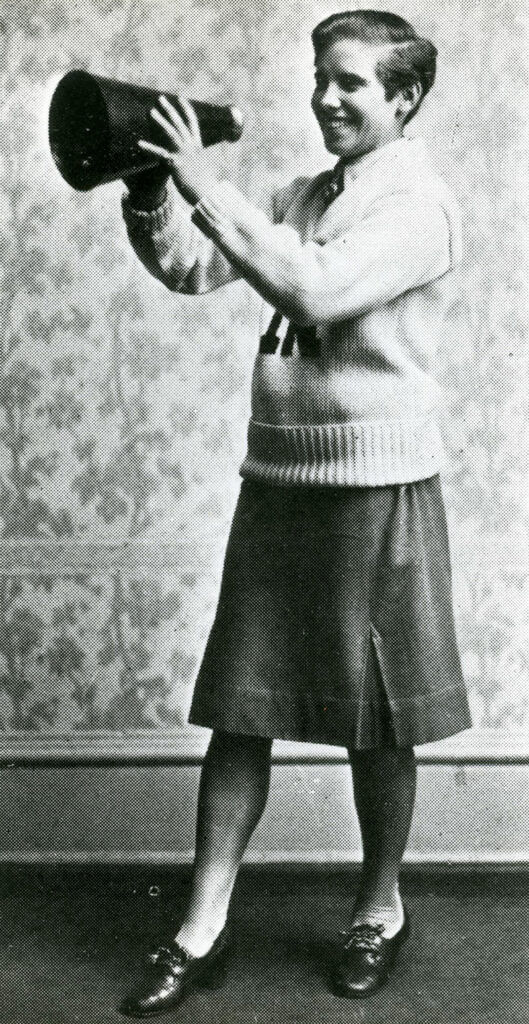
President Brown recognized that the post-WWI students were still struggling with a lack of enthusiasm for extracurricular activities. This he attempted to remedy by helping students organize new clubs to enliven their time at NISTC. He personally helped organize pep clubs and the selection of cheerleaders, and successfully sought admission to the “Little Nineteen” (IIAC) athletic conference.

Two other major initiatives are attributed to Joseph C. Brown: First, he sought to raise academic standards by tightening up admission requirements. High school graduates needed to rank in the top two-thirds of their graduating classes in order to gain admittance to NISTC, and for the first time, they had to pass standardized tests.

The second initiative led by President Brown was creation of incentives to attract and keep strong faculty. To that end, Brown convinced his board to create an emeritus program for retired faculty; create policies to allow for leaves of absence for faculty to continue their education; and finally, create a classification system that put all faculty into four different ranks, complete with a salary schedule that provided for annual increments.

All of Brown’s initiatives were undertaken with a larger goal in mind: To achieve accreditation from the North Central Association of Colleges and Universities, and to have NISTC students accepted without the need for additional coursework into the master’s programs of such prestigious institutions as the University of Chicago, University of Illinois, and Columbia.

Brown accomplished a great deal in a short period of time, but after a mere two years at NISTC, he was lured away by the offer of a much larger salary as the superintendent of schools in Pelham, New York, one of the wealthiest suburbs in the country.

Click on photos to enlarge

Joseph Clifton Brown becomes NISTC’s third president.
President J. Clifton Brown personally chose cheerleaders and brought NISTC into the IIAC athletic conference. He also raised academic standards for students and worked to build a stronger — and better supported — faculty.
Date posted: February 17, 2020 | Author: | Comments Off on J. Clifton Brown becomes third president (1927)

Categories:

The sudden departure of President Joseph Clifton Brown just three months before the start of a new academic year left the Teachers College Board little time to find a successor. Yet their ultimate choice, Karl Adams of the State Teachers College of St. Cloud, Minnesota, ended up serving in Northern’s second-longest presidency (19 years).

Like all three of the men who had gone before him, Adams was a strong proponent of keeping NISTC a single-purpose institution – that is, a school strictly for the preparation of teachers. That said, Adams was equally committed to making Northern the very best teacher training school in the nation, beginning with massive upgrades to curriculum and the academic credentials of faculty. Most of all, he wanted NISTC to gain North Central accreditation – a goal he finally reached in 1935.

The Adams years (1929 – 1948) encompassed both of that era’s defining influences: The Great Depression and World War II. The first had somewhat less effect on Northern than one might imagine, as the state’s normal schools had always received less money than their broader-purpose counterparts. Yet on a personal level, Northern students felt the pinch: Part-time jobs in the community were scarce, loans were hard to come by, and some students were forced to drop out due to lack of funds.

With the collapse of the American economy came serious challenges to academic freedom. Certain reactionary elements in the state legislature attacked academic institutions, even demanding that faculty take loyalty oaths. One particularly conservative board member demanded that an editor at the student newspaper be reprimanded for writing an editorial criticizing the validity of these oaths of allegiance.

Throughout these and other political challenges, President Adams stayed on the side of his faculty and students. In one sharply worded reply, Adams wrote “I do not believe that an oath of allegiance by teachers would be of any significant help in making better citizens of our teaching group.”

Times were changing, and the much-improved faculty credentials demanded by Adams produced a teaching corps at Northern with its own ideas about running the school. After much debate and persuasion by trusted colleagues such as Romeo Zulauf, President Adams agreed to establish a Faculty Administrative Council – the precursor to today’s NIU system of shared governance.

Just short of his 20th anniversary at NISTC – and the school’s own 50th “Jubilee” anniversary – Karl Adams died in his sleep at the age of 60. He was memorialized with the naming in his honor of Adams Hall.

Click on photos to enlarge

Karl L. Adams, NISTC’s fourth president
For reasons now lost to history, President Adams posed with students for this photo of a fingerprinting session.
Romeo Zulauf, faculty member and dean of instruction, is largely credited for helping President Adams understand the need for greater faculty involvement in university governance.
In this letter to the faculty, Adams describes a process by which teaching extension courses will offset other teaching responsibilities. Among other accomplishments, Adams is credited with formalizing many faculty processes that had been somewhat random prior to his administration.
Adams Hall, 1950
Date posted: February 17, 2020 | Author: | Comments Off on Karl L. Adams becomes fourth president (1929)

Categories:

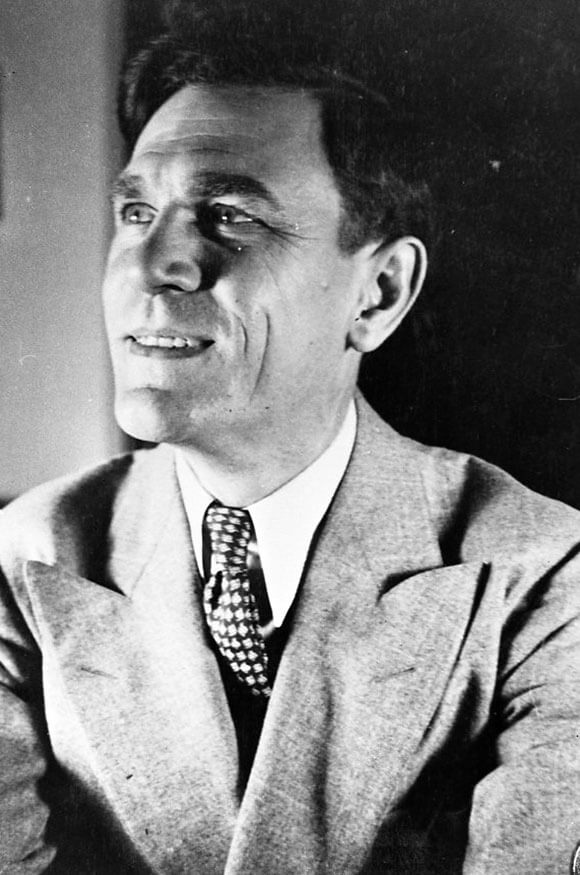
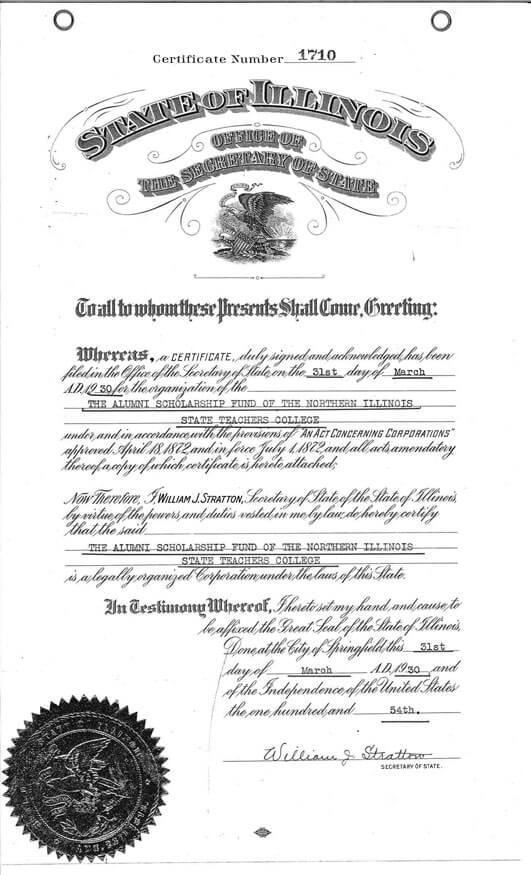
While Northern’s Alumni Association was legally incorporated in 1936, its history actually extends to the very beginnings of the institution.

With the commencement of Northern’s first 16 graduates in 1900, the association was already making strides to keep alumni connected. The first memorial fund was established in 1913, and the Class of 1916 established the first Student Loan Fund.

Two years later, alumni contributed to an effort to send an ambulance to France, where many Northern students were serving in WWI. Later, the association dedicated a bronze tablet in honor of 121 Northern men who served in the war and the two alumni who gave their lives.

The first official alumni chapter was organized in 1920, and by 1924 the organization had joined the Federation of Alumni Associations of the Illinois State Teachers Colleges. Just over a decade later, Northern’s alumni organization was legally incorporated, and in 1937 it hired its first executive secretary and established an official campus office.

As one of its first official acts, the AA established the Alumni Scholarship Fund in 1937, providing financial assistance to needy students. That same year, association members successfully advocated for expanding Northern’s academic mission to include extension courses, the first of which was held in Rockford in 1938. They also arranged the first radio broadcast of a Huskie football game in 1939.

During WWII, alumni helped spread the word to area high schools that Northern had been accredited for select military training programs. Association scholarship funds were put into savings bonds for the duration of the war, and the association sent copies of the Northern Alumnus newspaper to service people overseas.

Throughout the 1950s, the alumni association advocated for Northern to obtain full university status, an achievement finally reached in 1957. Two years later, the association contributed to the new student union building (now called Holmes Student Center), and raised money to furnish a new alumni office and faculty lounge in the building.

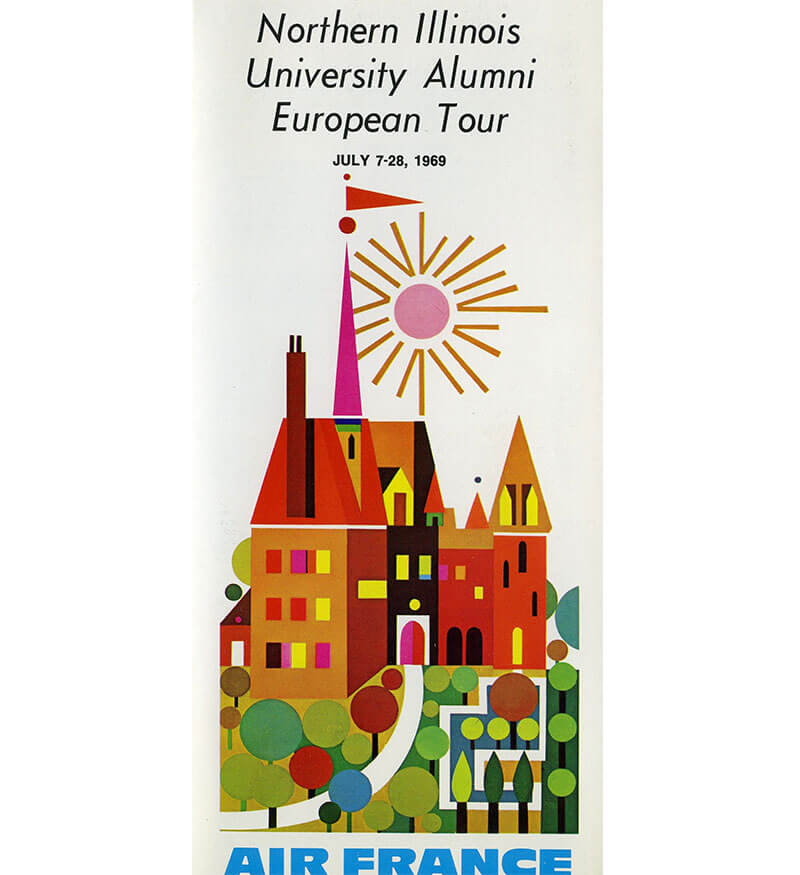
The 1960s were a time of growth for the NIUAA, with the establishment of Alumni Awards and the esteemed Travel Program. In the following decades, communication became a top priority, and the association responded with a quarterly newspaper called the Alumni News. That publication eventually evolved into the glossy magazine Northern Now, which currently keeps members up-to-date in both online and printed formats.

In 2005, alumni finally got their own official home on campus with the dedication of the Barsema Alumni and Visitors Center. Thousands of current and former students attend events at the center each year, ranging from pre-game receptions to career fairs.

Today, the NIUAA serves nearly 160,000 NIU alumni in Illinois and 244,000 worldwide. It offers programs, hosts events and partners with departments and organizations in support of NIU. And nearly 125 years after NIU’s founding, its alumni association still invokes a slogan from its earlier days: “That They May Know Who Came Before and Know We Care.”

Click on photos to enlarge

Handwritten minutes from an early Alumni meeting in 1906.
The first Alumni Scholarship Fund was approved by state declaration in 1930.
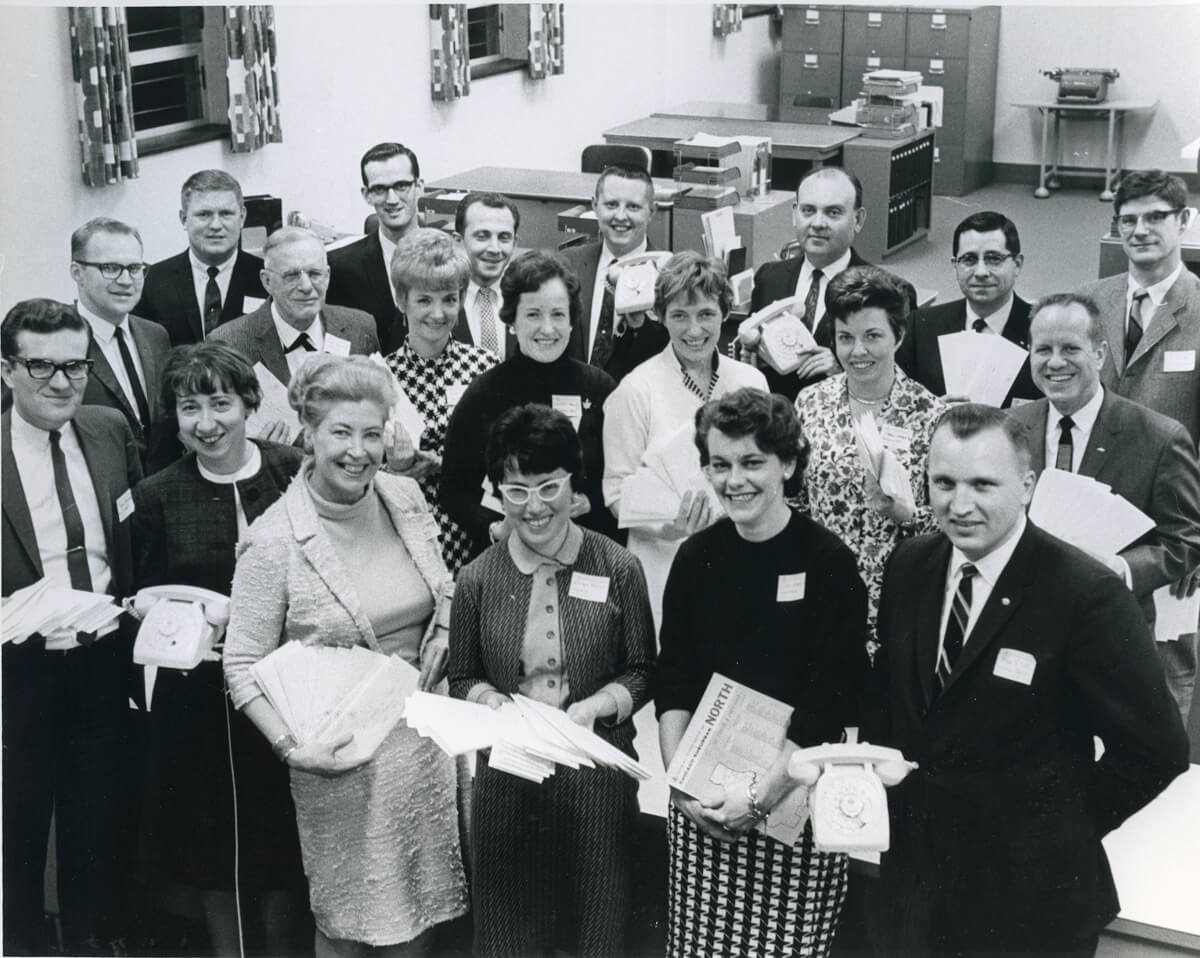
Alumni Association members participate in first fundraising “phone-a-thon” in 1967.

The Alumni Association travel program has been a popular offering for more than 50 years.

Date posted: March 13, 2020 | Author: | Comments Off on Alumni Association is incorporated (1936)

Categories:

By the time the United States entered World War II in 1941, NISTC had just over 1,000 students – 370 men and 638 women. Over the next four years there was a constant exodus of students – both men and women – into the armed services, leaving a wartime student population of fewer than 500 students.

For those who stayed in DeKalb, the war loomed large. Students and faculty alike sold war bonds, went without food and material needed for the war effort, and sent packages to their friends overseas. Pictures of the NISTC service men and women were displayed in the main foyer of Altgeld Hall, and a Faculty Defense Council was established, along with a Civilian Morale Committee, to coordinate volunteer efforts.

The number of volunteer war effort activities undertaken by NISTC faculty and students was impressive:

  • NISTC faculty and staff helped deliver the city’s Christmas mail.
  • They also ran a day nursery for the pre-school children of mothers doing war work.
  • The physical education faculty gave first-aid courses for war workers.
  • Students and faculty alike worked in DeKalb war industries that made everything from planes to hardware for parachute harnesses. The Wurlitzer factory east of campus had a patent for a process that quickly bonded wood surfaces, and the company landed a top-secret Navy contract to produce the largest components of wooden drone aircraft used in the Pacific war theater.
  • Faculty and students provided spot labor such as detasselling corn and harvesting vegetables for Del Monte, two-thirds of whose production went to the military.
  • And with the shortage of fresh food in local grocery stores, Northern faculty and students established a large “victory garden” in the area where the Neptune complex now stands. The garden continued on after the war under the supervision of Professor Fred Weed – not surprisingly, it became known as “The Weed Patch.”

In addition, NISTC ran a civilian pilot-training program under the direction of the Civil Aeronautics Administration, and was granted permission by the U.S. Navy to offer a special program that qualified young men for commission as officers.

But perhaps the greatest impact of WWII on Northern’s people and programs came after the war ended, and college campuses like NISTC were flooded with returning veterans. In 1946, enrollment jumped to 901 men and 541 women – the first time that men outnumbered women at Northern. Of those numbers, 731 men and 11 women – more than 50 percent of the student body – were veterans.

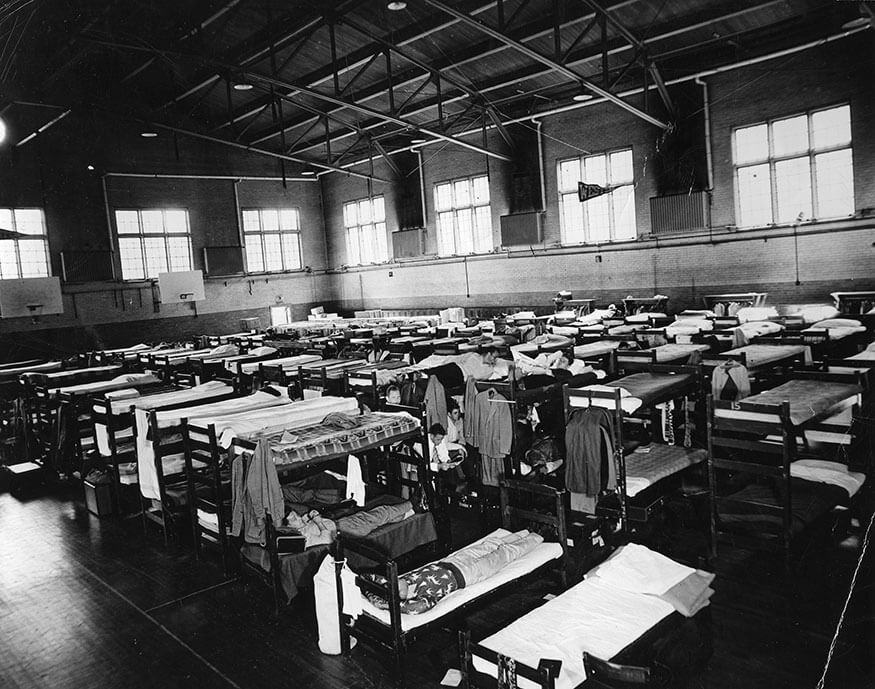
The most immediate result of this student influx was a shortage of places for them to live. With the first men’s dormitory (Gilbert Hall) still several years away, veterans and faculty joined forces to find space for students to live in DeKalb. One of their more successful techniques was attaching tags that asked about use of spaces like attics and basements to milk bottles delivered to DeKalb homes. Those who did not find living quarters in city homes were forced to sleep on cots and bunk beds in campus spaces such as the Still Hall gymnasium.

In the end, relief came in the form of surplus army barracks released from Fort McCoy in Wisconsin. Nineteen such structures were set up on land at the corner of Lucinda Avenue and Garden Road, and soon a cafeteria joined the barracks. The entire area became known as “Vetville,” and it was the social center of campus for many years. Several of the Vetville structures remained standing for nearly 40 years, with the last one being torn down in the 1980s. Some 400,000 Americans died in World War Two. Thirty-seven of those who made the ultimate sacrifice were students from Northern Illinois State Teachers College.

Click on photos to enlarge

The burgeoning post-war enrollment of male students required creative housing solutions, such as these beds and cots in Still Gym.
Nineteen barracks from Fort McCoy, Wisconsin were moved to DeKalb and placed on land at Lucinda and Garden Road to accomodate the huge influx of post-war students.
An aerial view shows campus in 1949 with “Vetville” (lower right) prominently in view.
Vetville barracks housed not only male students, but often their wives and children.
A Norther yearbook page from 1948 honors 37 students who died in the war.
Date posted: March 13, 2020 | Author: | Comments Off on World War II leaves its mark on NISTC (1939 – 1945)

Categories:

Northern’s athletic mascot wasn’t always the Huskie.

In the beginning, NIU teams were known as the Profs – no doubt a reference to the institution’s mission as a teacher’s college.

During the 1920s, they were referred to as the Cardinals – probably due to the color of the school’s athletic jerseys.

In the 1930s, admiration for the legendary athletics pioneer George “Chick” Evans translated into the nickname “Evansmen.”

Finally, in 1940, a four-man committee consisting of Evans, Harold Taxman, Walter Lorimer and Harry Telman (all members of the Varsity Club) was appointed to search for “… a term with a trifle more dash.”

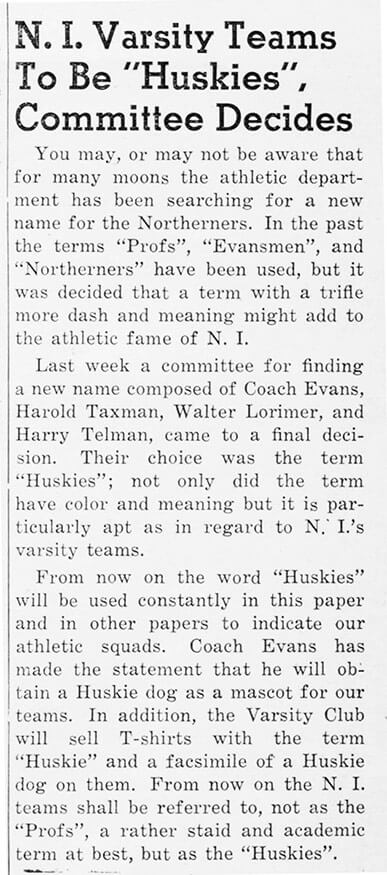
After much debate, an agreement was reached and reported in the January 25, 1940 Northern Illinois student newspaper.

“From now on, the word “Huskies” will be used constantly in this paper and in other papers to indicate our athletic squads,” the article read.

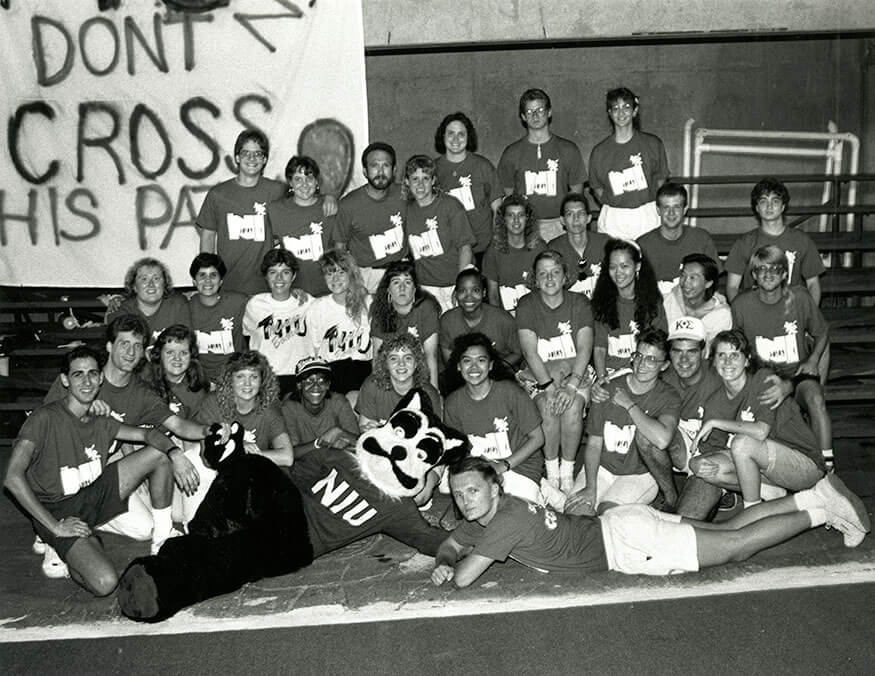
Since being elevated to Division I status in the late 1960s, the Huskie mascot has had several incarnations: a series of real dogs, a live Victor E. Huskie in costume, and several line drawing logo versions.

For Baby Boomers, the most popular version was the fighting Huskie in a boxer’s stance. In the 1980s, athletic wear sported the running dog logo. And today, the bold side-view logo is the dog whose likeness appears on t-shirts, football helmets and a host of other applications.

The American Kennel Club notes that the Siberian Husky is “loyal, outgoing, mischievous, friendly, fastidious and dignified … Quick and light on its feet and free and graceful in action.”

And about that unique spelling: Prior to the 1960s, written game reports used “Husky” and “Huskie” interchangeably. In 1967, Sports Information Director Bud Nangle made it his mission to ensure that the NIU dog was, now and forever more, a Huskie. And so it has been ever since. H-U-S-K-I-E-S – Go, Huskies!

Click on photos to enlarge

This 1940 student newspaper article made it clear that Northern’s teams were to be called Huskies.
A Golden Anniversary football program from 1948.
The live Huskie mascot costume has undergone several changes over the years.
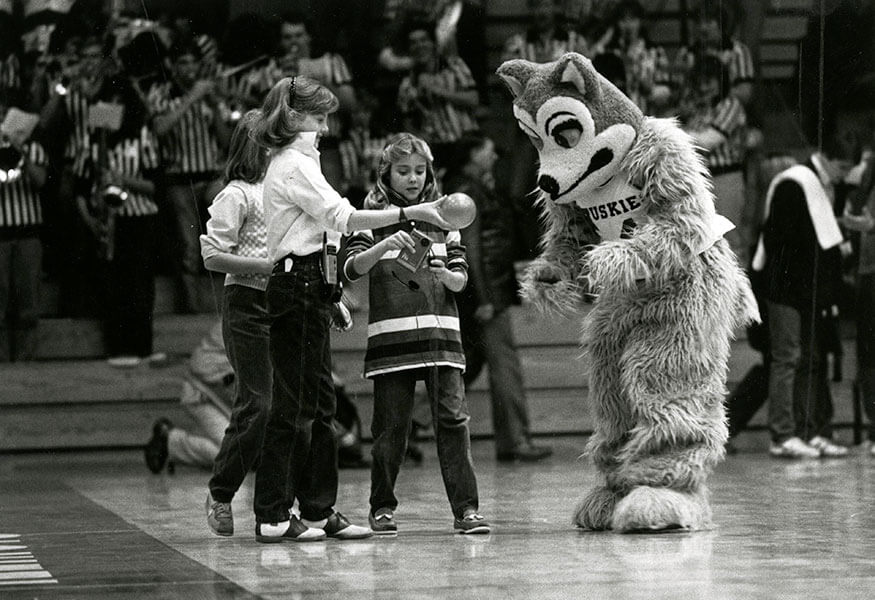
Victor E. Huskie is a popular figure with young attendees.
NIU's Mascot Mission
Mission enjoys his stardom as NIU’s current mascot.
Date posted: March 13, 2020 | Author: | Comments Off on Northern’s athletic teams are formally named the Huskies (1940)

Categories: