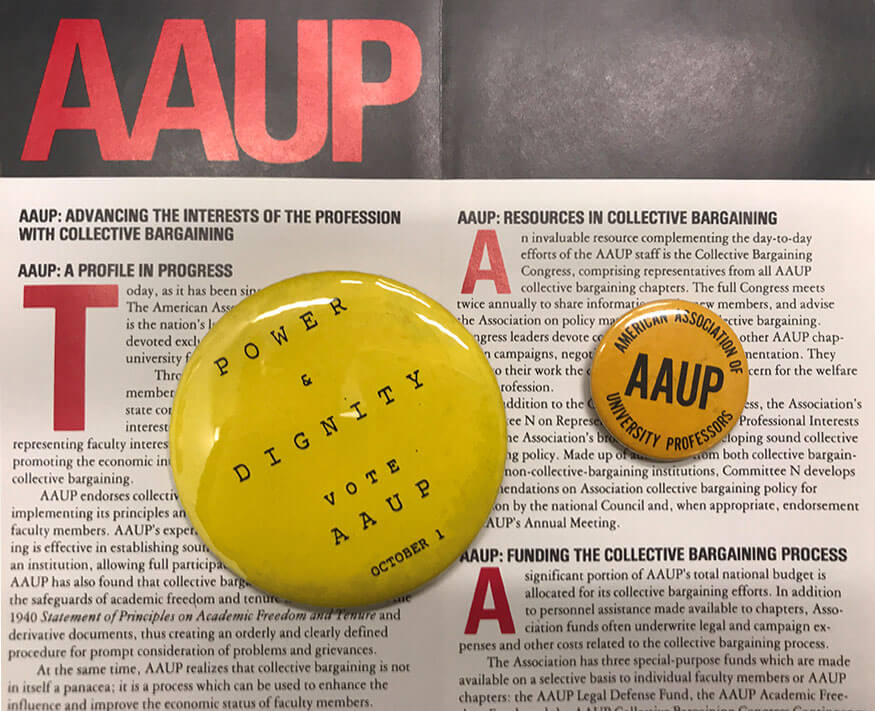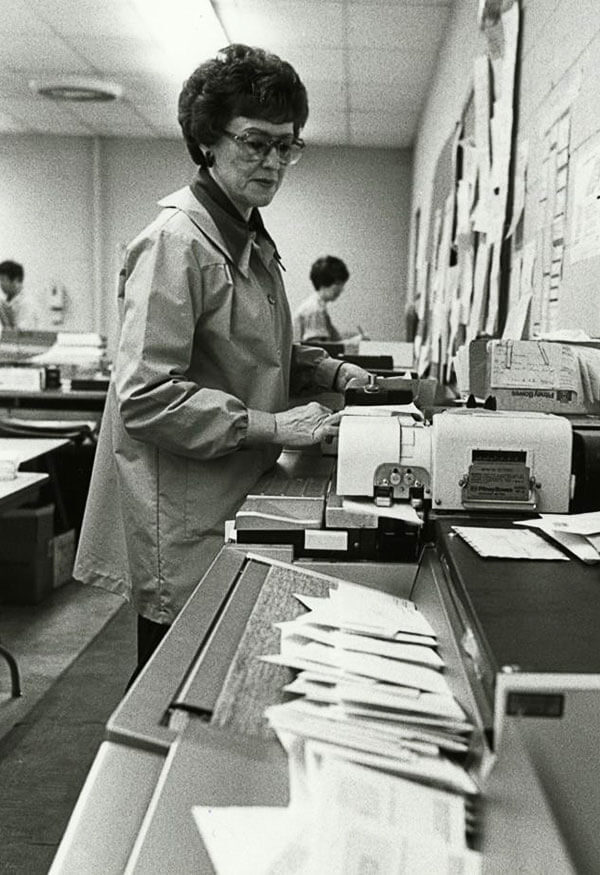
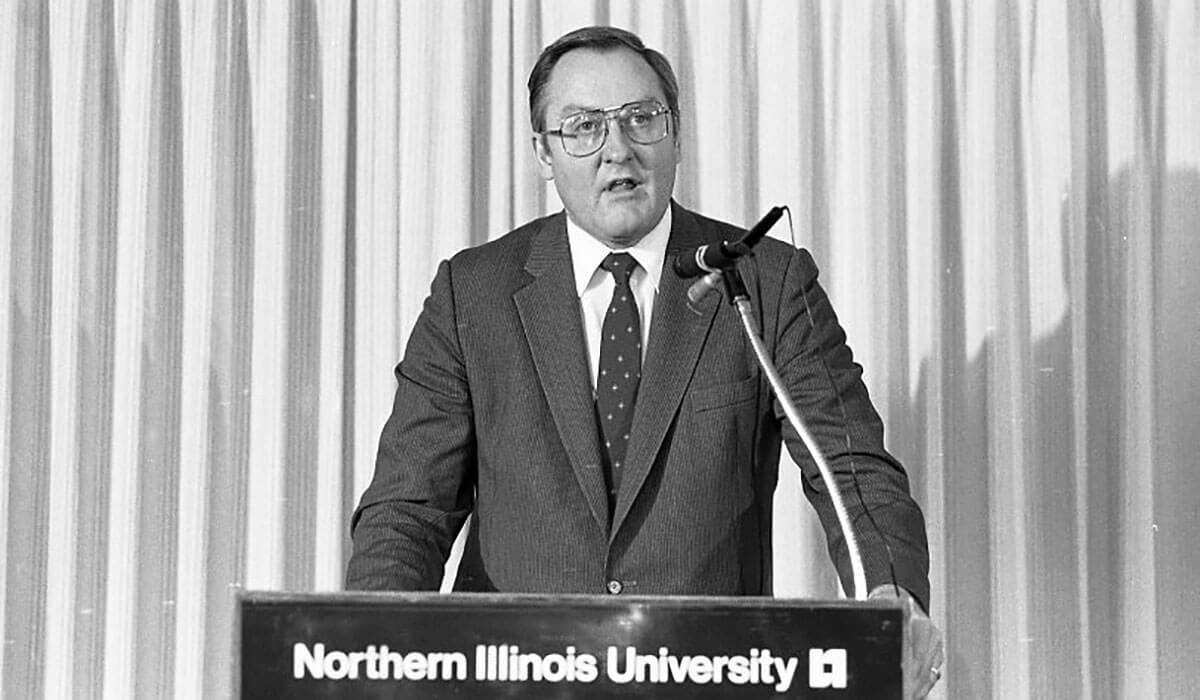
Illinois was one of the last northern industrial states to pass enabling legislation that allowed public sector collective bargaining. Repeated attempts to pass collective bargaining rights failed primarily due to strong opposition from Chicago Mayor Richard J. Daley and his successors Michael Balandic and Jane Byrne.
But in 1983, union-backer Harold Washington was elected Mayor of Chicago, and, together with collective bargaining supporters Gov. Jim Thompson, Speaker of the House Mike Madigan, and Senate President Phil Rock, they made it happen.
On September 23, 1983, Governor Thompson signed House Bill 1530, guaranteeing collective bargaining rights to any employee of a higher education institution in Illinois. The bill took effect on January 1, 1984, and also created a three-member Illinois Educational Labor Relations Board (IELRB).
While some unions had existed at NIU prior to this, with the passage of HB1530 employees were given the legal right to strike as part of the collective bargaining process.
Today bargaining units at NIU include the following:
AFSCME 963 (Building and Dining Services)
AFSCME Local 1890 (Clerical)
AFSCME 963 (Health Services)
IBEW 364 (Electricians)
IBEW 364 (Voice/Data/Video install and repair)
IUOE 150 (Grounds)
IUOE 150 (Route Drivers)
IUOE 399 (Heating plant)
IBT 330 (Transportation)
IBT 700 (Building Services sub-foremen)
MAP 675 (Telecommunications
*MAP 291 (Police Officers)
*MAP 292 (Police Sergeants)
*MAP 414 (Security Guards)
*These MAP units are under the jurisdiction of Illinois Local Labor Relations Board
United Brotherhood of Carpenters and Joiners of America Local 790
United Faculty Alliance (tenured & tenure-track faculty), part of the University Professionals of Illinois (UPI) and affiliated with the AFT, IFT and AFLC-CIO
UPI Local 4100 (Instructors)
Click on photos to enlarge.