During the early years of the University Council, President Leslie Holmes had objected to the caucusing done by faculty prior to council meetings. But of course it continued, as faculty sought to concur on issues before a full Council vote.
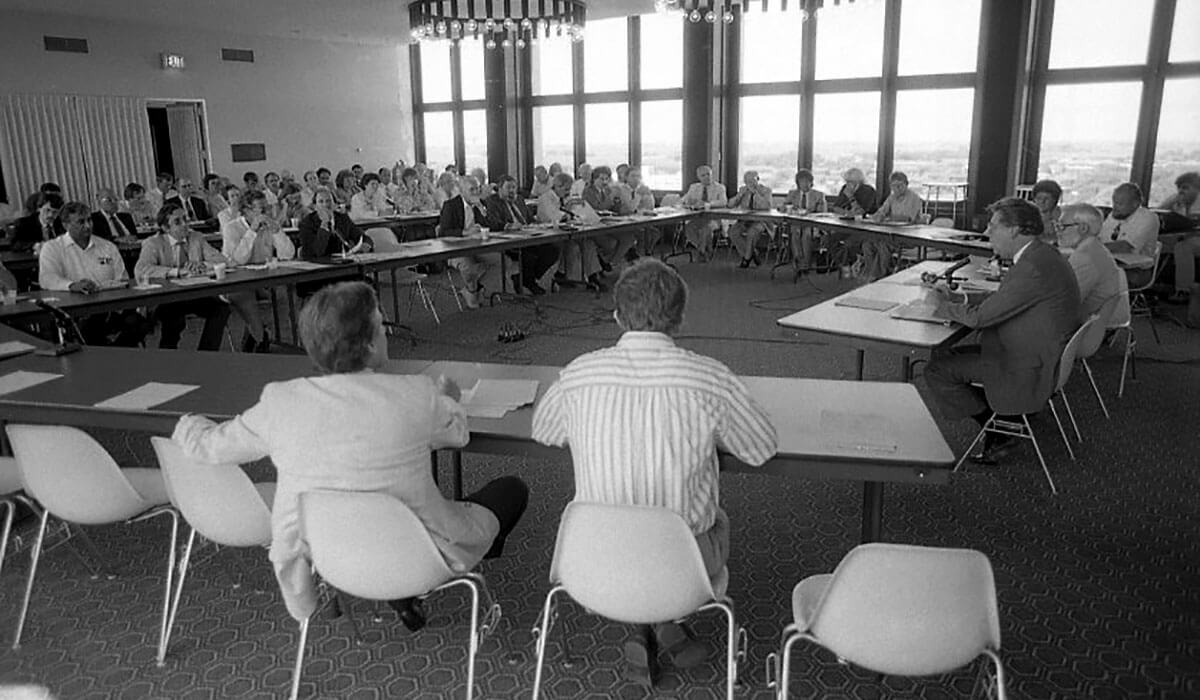
In 1976 the faculty caucus assumed a more formal role as the Faculty Assembly, a group legitimized through constitutional amendment.
A decade later, following the University Council’s approval of extensive revisions to the University Constitution, the Faculty Assembly authorized University Council Executive Secretary Judith Bischoff to appoint a faculty task force to develop a proposal for a faculty senate at Northern Illinois University.
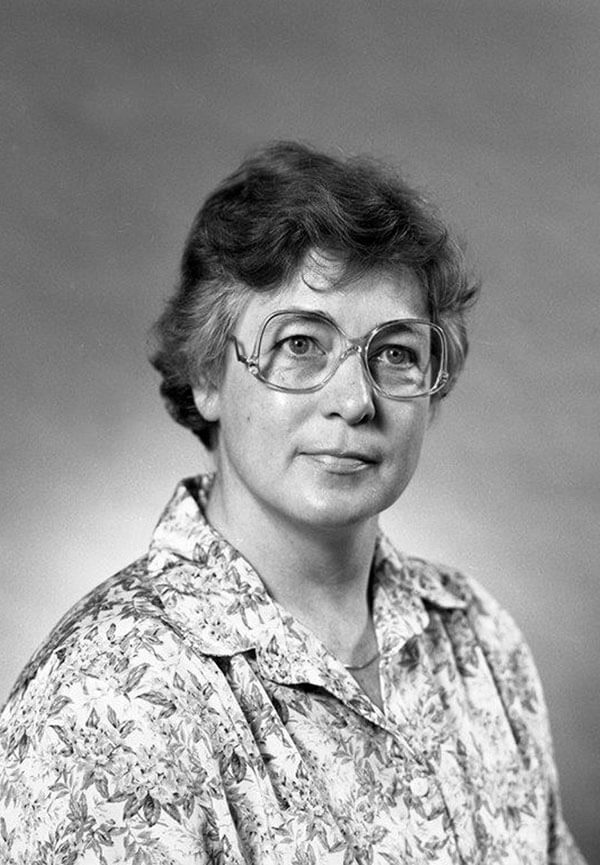
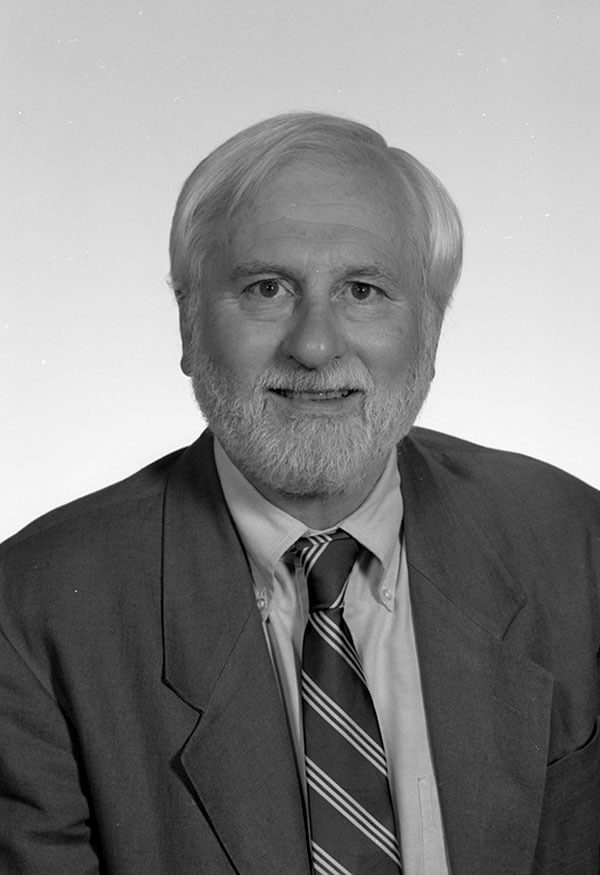
The group consisted of long-standing faculty members and university citizens of unimpeachable character: Dorothea Beard of Art; Gordon Dorn, also of Art; Dan Griffith of Biological Sciences; James Lankford of Communicative Disorders; Walter Owens of Physical Education; Eugene Perry of Geology, Gordon Schneider of Law, Jack Skeels from Economics; Linda Sons of Mathematical Sciences; Conard White of Technology and Harold Wright from Business.
The group met for months in the spring and summer of 1988; studied the constitutions of nearly 30 universities; and emerged with a plan for a true faculty senate at NIU. It was guided by two principals: proportional representation and disciplinary diversity. From the first came much broader representation and an increase to 75 members; from the second a request to be consulted in matters of university budgeting, facilities, long-range planning and proposed changes in administration.
And thus the Faculty Senate replaced the Faculty Assembly with broader representation, a more formal structure, and a specific mission as the “authoritative and official voice of the university faculty.”
J. Carroll Moody of History had been the chair of the assembly and was quickly elected to head the Faculty Senate. Moody went on to serve as executive vice president and provost in the 1990s.
Click on photos to enlarge.