
In the chill of a DeKalb winter in 1972, President Richard Nelson met with a small group calling themselves the Organization of Latin American Students (OLAS).
The students presented several grievances: First, they wanted to see more effort put into recruiting Latin American students, as there were only 94 on a campus of 23,000 students. Second, and related to the first point, they wanted to see more scholarships offered for Latin American students. And third, they asked that the university hire more bilingual teachers and counselors.
Finally, they pointed out that NIU could do more to create a sense of community among Latin American students, as they came from a variety of countries and brought diverse cultures and traditions to campus.
Nelson studied their requests, then proposed a merger of two existing academic entities – the Office of the Coordinator for Latino Programs and the minor in Latin American Studies. Out of this merger came the Center for Latino and Latin American Affairs, approved by the Board of Regents in September 1978.
Like other centers that NIU created in the 1970s, the Center first found quarters in one of the many houses purchased on the periphery of campus, in this case on Garden Road across from Anderson Hall. Its first director was Vernon Lattin, an English professor of Mexican heritage. He was succeeded three years later by Professor Felix Padilla of Sociology.
As the Latinx student population grew, new organizations were formed, including the activist group El Pueblo Unido. EPU successfully lobbied for an SA-funded and recognized Latino/a Cultural Awareness Committee, and created the first Latinx-led national conference called Voz de Alianza Latina/o Estudiantil (VALE).
The period of activism in the late 1980s and early 1990s raised NIU’s profile among Latinx families in the region, and Latinx enrollent increased. At the same time, Latinx representation within the Student Association and on hiring teams and campus advisory boards increased dramatically.
In 1986, University Resources for Latinos (URL), was established to help students with career preparation and financial aid; it also sponsored cultural events.
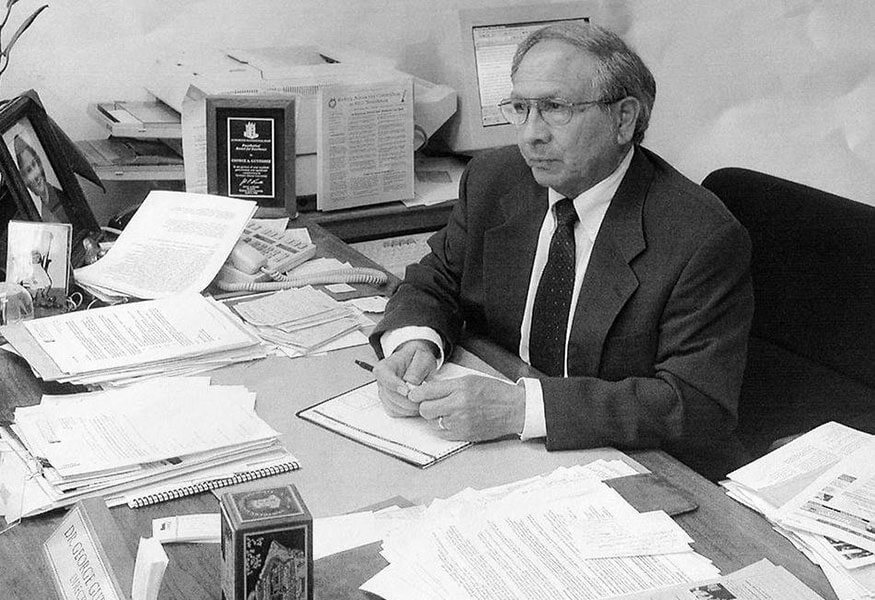
URL’s first and long-time director was George Gutierrez, who operated programs out of the Oderkirk House on Annie Glidden Road.
By the early 1990s, a much-expanded Latino student population had outgrown both the Center and URL facilities and began advocating for a new, updated space to house both academic and support programs.
The house on Garden Road was demolished, and in its place was built a 6,500-square foot, two-story building with faculty and staff offices, a conference room, computer lab, classroom and library, with multiple spaces for students to meet, study and socialize on campus. While its first sign read “Center for Latino and Latin American Studies AND University Resources for Latinos,” it quickly became known as simply the Latino Center.
Today, the Center serves as a home for the interdisciplinary study of the Latinx experience in the United States as well as Latin America and the Caribbean. It also houses programs that aid in the recruitment and retention of Latinx students, offering support to student organizations, mentoring programs and cultural activities for what has become NIU’s largest minority student population.
Click on photos to enlarge